Posts

Showing posts with the label collaboration

Reflections on 2020 .... team work and productivity

Image
2020 has been a strange work year, it has exposed some underlying issues such as benefits of remote working. Here I take a look at a couple of practices that I think 2020 has shown some clarity. Impact of 100% utilisation Photo by Elena Mozhvilo on Unsplash One thing that really became clear was how 100% utilisation impacts team work. I think this creates an organisational bias towards individual contributions, unilateral decision making, and knowledge silos vs team work, collaboration, and shared understanding. This is due to overlapping free time in the team reducing as you have other constraints, such as reduced working hours, and other unexpected work. That being said Rich Mironov has some warnings around what happens when you think " We [should] keep some overflow engineering capacity for emergencies. ". The tiny fix example he gives is IME usually a signal for a bit of an outsized time sink, due to the knock on effects it can have in the product due to increasing testi...

What I've been reading w/c 22/01/2018 Design and focus

This week has been about kicking off projects at work and a major release for my side project. Because of this my reading has probably gravitated towards thoughts of design, focus and leadership around both.  Voice-Enabled Design is different enough to "point and click" that I think it will lead to some change of the profile of Product People. Interesting theory here that Drama Teachers will be the ideal people to lead the charge here.  Drama teachers may be one specialism IT could do more of. Critical thinkers is another. For example  “I think it will make for a perfect alarm clock”  Trusted Reviews - Amazon Echo Spot Here it looks like part of the problem with technology is the largely uncritical approach of what could go wrong, in building and selling, no mention of privacy concerns apart from throw away comment about a "mute" feature. Maybe they fell foul of the issue in this great quote from  Davide Vitiello in his  Focus vs Product Team St...

Lessons that 2017 taught me

Image
Photo by  Annie Spratt  on  Unsplash I never used to see the point of "end of year round up" blog posts. But the journey that I've been on during the past year has lead me to reflect on what I have learned. The beginning of the year started off with me thinking about being data informed . This was balanced by a survey that showed this work had paid off . Since then I have put in processing to help collect and report on what we guided us to detect changes. Learning R and creating a repo to share the data processing recipes  has been the culmination of this. Data isn't just an important topic for product management, combined with ethics it's a topic that is increasingly touching our lives. My interest was first piqued in my reading during April .  Later in the year as GDPR started to loom on the horizon I took a course on Ethics and Law in Data and Analytics . This was a great course that covered not only some philosophical exploration of what it m...

BOOK REVIEW: Product Leadership By Richard Banfield, Martin Eriksson, Nate Walkingshaw

Image
I've had this book on preview as each chapter came out and I've finally had a chance to read the full release version. So before it gets officially launch at MTPCon on June 13th here is my round-up... Formats : Paperback, DAISY, ePub, Mobi, PDF Where can I get it?  From  O'Reilly , Amazon or .... any good bookshop, although I think there are currently only 500 physical copies left world wide!     Who is it for?  Anyone involved in a software product development team or a startup founder thinking about which roles to hire next.  What's it about?  Product management, product leadership, not just the overlap but also the differences. How to grow your career as you grow into product leadership and how to hire the role for senior management. What's the book like?  The book is divided into three sections: The Product Leader The Right Leader for the Right Time Working with Customers, Agencies, Partners, and External Stakeholders The ...

Challenges in travel technology - a holiday makers perspective

Image
I love travelling, not because of going to new places - although that is great! - but because I enjoy the journey. Mainly because I'm a travel and systems thinking nerd. My latest holiday was a chance to look at airlines and airports in a different way. Scheduled flights to hubs for business are one thing, package holidays to small airports proved another thing entirely. In fact, comparing Gatwick airport to Heraklion it is a good example of this quote The future is already here – it's just not evenly distributed.   William Gibson It got me thinking about two major challenges to objectives of the IATA fast travel program being the norm across the whole industry. Culture The first is customer culture. Self-service common use technology is still in its infancy. Previously there has been a consistent expectation for example of what travel means, and how desks work, this is now being replaced with different tech and varying security rules. For example, even a large...

What I've been reading w/c 17/04/2017: Diversity and Ethics

Image
Slightly delayed post due to going on holiday! My week's reading started with Hofstadter’s Law and Realistic Planning By Jane Collingwood where she outlines how "pessimistic-scenario generation is not an effective de-biasing technique for personal predictions .”  this got me thinking about how much of what we do in our lives is shaped by the people who provide us with the services and products that we use. This article by Monzo is a perfect example of ethical product design should be done. They have thought about what their mission is, who their users are and what issues they might face. Compare and contrast with stories of how Uber use psychology to exploit drivers to see the negative face of "disrupting industries" when that is the sole aim.  Again working conditions can have an impact even in subtle ways. There is a case here for Product Design and OS professionals to   provide more support on reporting usage to users . Computers are much better at this...

On documentation and audiences

In this post, I'd like to make a short plea for better product documentation. One of the entry points to the Cronofy API documentation has an explicit link "for Product Managers". This link takes you to their use cases page. Over the past few years, I have looked at plenty of API documentation. From PDFs to the current trend of a GitHub repository and wiki. This was striking in how unusual it was. But if your product is an API then why should it be? In the technology service industry should we go further? Should there also be a "for testers" link? This could be like the Cronofy Product Managers link. It could reuse existing information but highlight and target them for a specific audience. For example, take the developer sections about rate limits and validation. Then add testing tips about your API for integration testing. Stripe has good developer documentation . Yet you have to scroll down a couple of pages of information before reaching the words "...

On spikes and learning

Image
Photo by Sebastiaan ter Burg So having a good roadmap with themes it is now important to get the work delivered somehow. Unless the developers have done something similar enough before. You need some way of discovering how to chunk up the work. What you call this doesn't really matter, but I have used the agile term "spike".  According to a comment in the Agile dictionary , this is a rock climbing term. A spike is driven into the rock face to help support the climbers. Although it does not get us closer to the top it allows us to go faster and have a safer climb. Likewise, a development spike doesn't produce the feature faster, but it provides a foundation to move forwards. In a project kick-off meeting, I remarked about how successful the spike had been. A developer there joked that I should write a blog about it, so here it is... "challenge accepted". I have been reflecting on what I feel made the spike successful. This particular...

On design and collaboration

Image
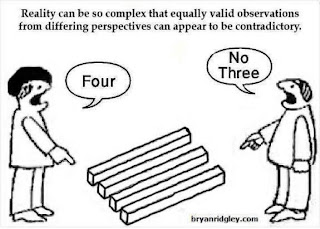
This post has had a long gestation period, starting after I attended the BCS PROMS-G Spring Summer School on Risk in 2013! I've been thinking a lot recently about process and why we do it and what we hope to achieve. In my experience there are a large group of people who cringe when they even hear the word "process", seeing it as a command and control mechanism. But I believe that for every necessary process there is a positive by product that we should be focussing on, and working with, for improvement. To illustrate this I will discuss a design review process. Say an organisation has issues with the introduction and evaluation of new technologies and techniques. So the re-action is to introduce a formal design review process, with feedback from various stakeholders and sign-off before the change gets the go ahead.  The tale of the 6 blind men and the elephant where different perspective and views on an issue, we need to see the bigger picture and get a common p...

15below

Image
I don't usual write about my workplace directly on social media or this blog. But today I'm just going to briefly touch on some of what makes it a good place to work for me. Basically for me a good work place always boils down to two things 1) the people and 2) a general sense of inquisitiveness. Working Late by Thomas Høyrup Christensen I work for 15below a software development company that specialises in the travel industry. It's fair to say we are probably market leaders in the kind of workflow driven notifications that we do. We have internal tools that started for a particular business need and are now side projects such as Gallifrey, what I love watching here is how is allows people to play with techniques that aren't always useful in the day job - such as click once deployment in github We also have internal tools, which are part of say our build chain, that get open sourced - such as the aptly named  Build.Tools  or fixes to how packaging works in...

On pets and projects

While watching the Little Cat Diaries the other day, the experiment comparing cats and dogs behaviour to an earlier experiment with children stuck me. In the original experiment the children were pleased to see parents who left then returned to the room as they saw them as a provider of security. They repeated this experiment first with dogs, who used their owners as points of reference and providers of security. The cats however, were different. They showed more interest in the stranger present in the room if anything. The conclusion was that the cats saw their owners as providers of resources. I like to think we can make a (fanciful?) analogy here with project managers and the team. Formal command and control processes guide project managers into becoming dog owners. I would suggest that agile techniques put them in the position of herding cats and therefore "merely" providing the resources needed to achieve the team goals. Be interested to hear peoples thoughts on th...